How to Make an Art Drop-In Session Welcoming for Neurodivergent Visitors
A drop-in art session is one of the friendliest things a community studio can offer. No application, no term fee, no promise to come back next week. You arrive, you make something, you leave. Yet for many neurodivergent visitors — autistic people, people with ADHD, dyspraxia, sensory processing differences, Tourette's, and others — the drop-in format is exactly what makes it difficult. There is nothing to prepare from, no way to predict the room, and no obvious permission to sit at the edge and watch. The encouraging part is that most of the barriers have little to do with art. They are about noise, lighting, unclear expectations and the feeling of being noticed. Those are things a studio can change this week, usually for very little money.
Publish What to Expect Before Anyone Arrives
The first adjustment happens before the door opens. A listing that says "friendly art drop-in, all welcome" gives a visitor nothing to plan with. A short "what to expect" note on your website does the work of a dozen reassuring conversations.
- Logistics. Step-free access, where the entrance actually is, stairs, bike parking, toilets and whether they are gendered or accessible.
- Sensory facts. How loud it usually gets, whether music plays, whether the lighting is fluorescent, and which hour is quietest.
- How it works. Whether you book or just turn up, whether arriving late is fine, whether leaving early is fine, what it costs, and when it finishes.
- A named contact. An email address, plus a plain offer: "Tell us anything that would make the session easier and we'll do what we can." Not everyone wants to phone.
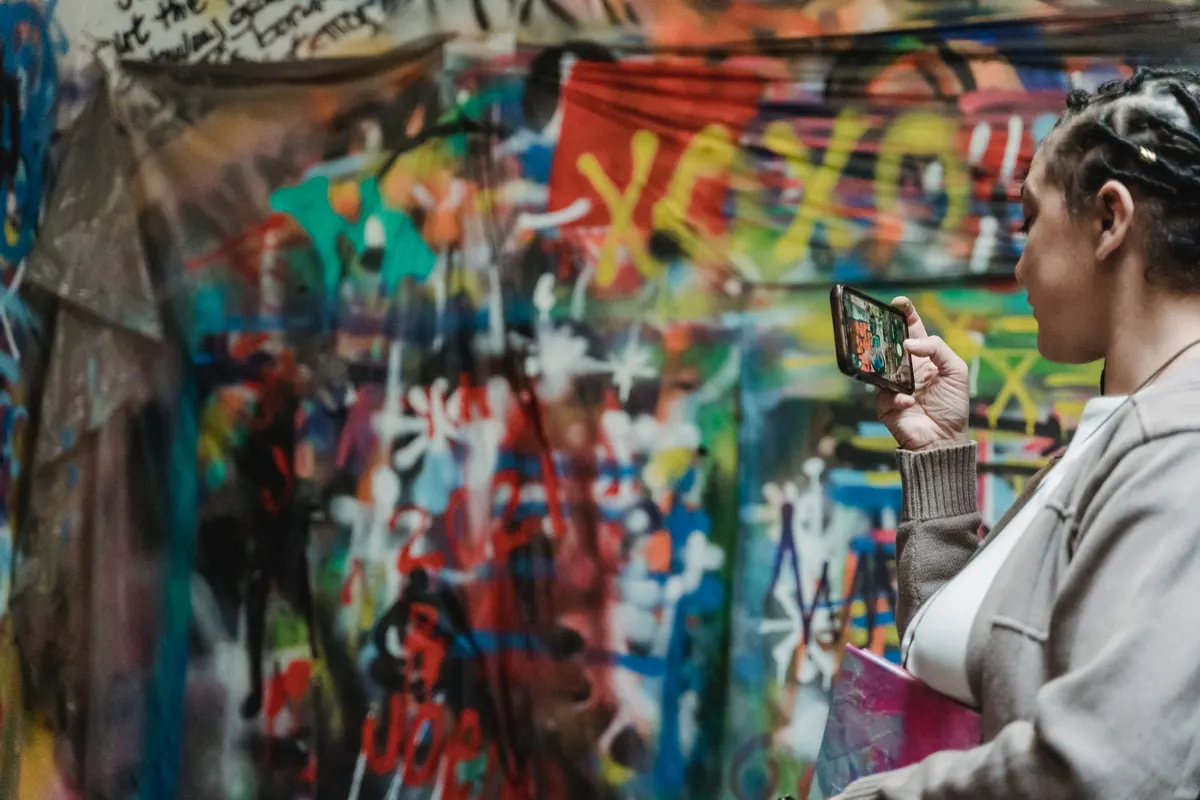
Three or four phone photographs of the real room will do more than three paragraphs of description. Photograph the entrance, the main table, the sink and the quiet corner. If the space is sometimes loud because of a pottery wheel or a sewing machine, say so, and say when it runs.
Lower the Sensory Load
You do not need a purpose-built sensory room. You need to remove the small assaults that build up over an hour.
- Sound. Keep background music off by default, or low and instrumental. Put felt pads under chair legs. Fix the door that bangs. Warn people before switching on anything loud.
- Light. Use lamps instead of full overhead strips where you can. Replace flickering tubes. Keep one table near a window, and let people move a screen or blind if the glare is too much.
- Smell. Choose unscented cleaning products, seal solvents and white spirit in a cupboard, and ventilate before people arrive rather than during.
- Touch. Offer gloves and aprons without making them compulsory. Have an alternative to wet clay, chalk or glue for anyone who dislikes the texture, and keep wipes within reach.
- Crowding. Cap numbers or run timed slots so there is always a chair free. A room that feels full at twenty people is a different room from one that holds twelve comfortably.
Say What You Mean, More Than Once
Instructions delivered once, out loud, to a group are easy to lose. Show the technique to whoever is watching, then leave a written card at each table with four or five simple steps, then offer to sit with anyone who wants a hand. Ask "would you like me to show you, or would you rather have the sheet?" instead of "any questions?" — the second question puts the burden on the person to admit they are lost.
Give a five-minute warning before you start packing up, and use a timer people can see. Explain what happens next: whether work stays on the rack, goes home, or is photographed. If you use idioms or jokes, be ready to say them plainly a second time. And avoid relying on eye contact as a sign that someone is listening; plenty of people take in every word while looking at the table.
Make a Quiet Space People Will Actually Use
A corridor with a chair is not a quiet space. A corner with a curtain, a door or even a tall screen is. Inside it, post the rules so nobody has to guess: no talking, phones on silent, you can stay as long as you like, you do not have to explain why you are here.
Leave something to do with your hands that is not the main project — paper, pencils, a bowl of fidgets, a jigsaw. Add water, a chair with arms, and a cushion. Most importantly, have a volunteer say at the welcome, out loud: "There's a quiet room through there. Anyone can use it at any point, for any reason." Permission stated once is what turns a room from an idea into an option.
Keep Participation Genuinely Flexible
Drop-in should mean more than an open door. Useful options to state clearly at the start:
- Come late, leave early, or come and go.
- Make the set project, adapt it, or bring your own.
- Watch for a while before joining in.
- Help with tidying or setting out instead of making.
- Wear headphones, sit apart, or work with a friend.
Skip the end-of-session group sharing unless people opt in; a table where finished work can be left for others to see works better than being asked to talk about it. Never photograph the room without asking first, and say clearly that anyone can decline. Do not ask about diagnosis. If someone is distressed, offer space and quiet, ask what would help, and signpost to appropriate support rather than attempting to manage anything clinical yourself.
Brief the People Doing the Welcoming
A warm session can be undone in ten seconds by a volunteer who greets someone with "you look nervous, come and sit with the group." Brief everyone — regular helpers included — on a few habits: greet once and then let the person settle; offer choices rather than instructions; accept "no thanks" the first time; keep the goodbye simple. Write these down. New volunteers pick up tone far faster from a one-page note than from a busy room.
Review It Often, Change One Thing at a Time
Ask visitors a single closing question now and then: "What would have made today easier?" Keep the answers in a notebook and act on the cheapest one first. Move a lamp. Buy ear defenders. Rewrite the listing. Add a second quiet slot.
None of this requires a diagnosis, a disclosure or a special session. It requires a studio that assumes difference is normal, describes itself honestly, and leaves room for people to take part on their own terms. Start with the information you publish and the volume of the music. Those two changes alone will change who walks through the door.
Photo: ean254 / Pixabay